
coffee time!
Let the lasagna making commence!
Tonight a song came to me, via another song that had popped up into my brain from the long ago past. I was in search of the rest of what went with this:
I said all the dead head miles and the insincere smiles.
Sometimes I can laugh and cry and I can’t remember why.
And then I got to remember this:
It was just after sunrise and down by the sea,
down on the sand flats where nothing will grow,
come drumming and footsteps like out of a dream
Where the golden green waters come in.
Just nine lucky soldiers had come through the night,
Half of them wounded and barely alive.
Just nine out of twenty was headed for home with eleven sad stories to tell.I remember quite clearly when I got out of bed,
I said, oh, good morning what a beautiful day.
– Soldiers, James Taylor
Which made me think back on the commute to work this morning where I’d wanted everyone to hear what I’d heard on the radio and cry with the parents and tell every politician that no one’s son or daughter should have to despair of what he’d seen in war. Surely we can do better in resolving the world’s issues.
Thank you to the Pilgrims for their strength in telling their story and to NPR for sharing the story of their son.

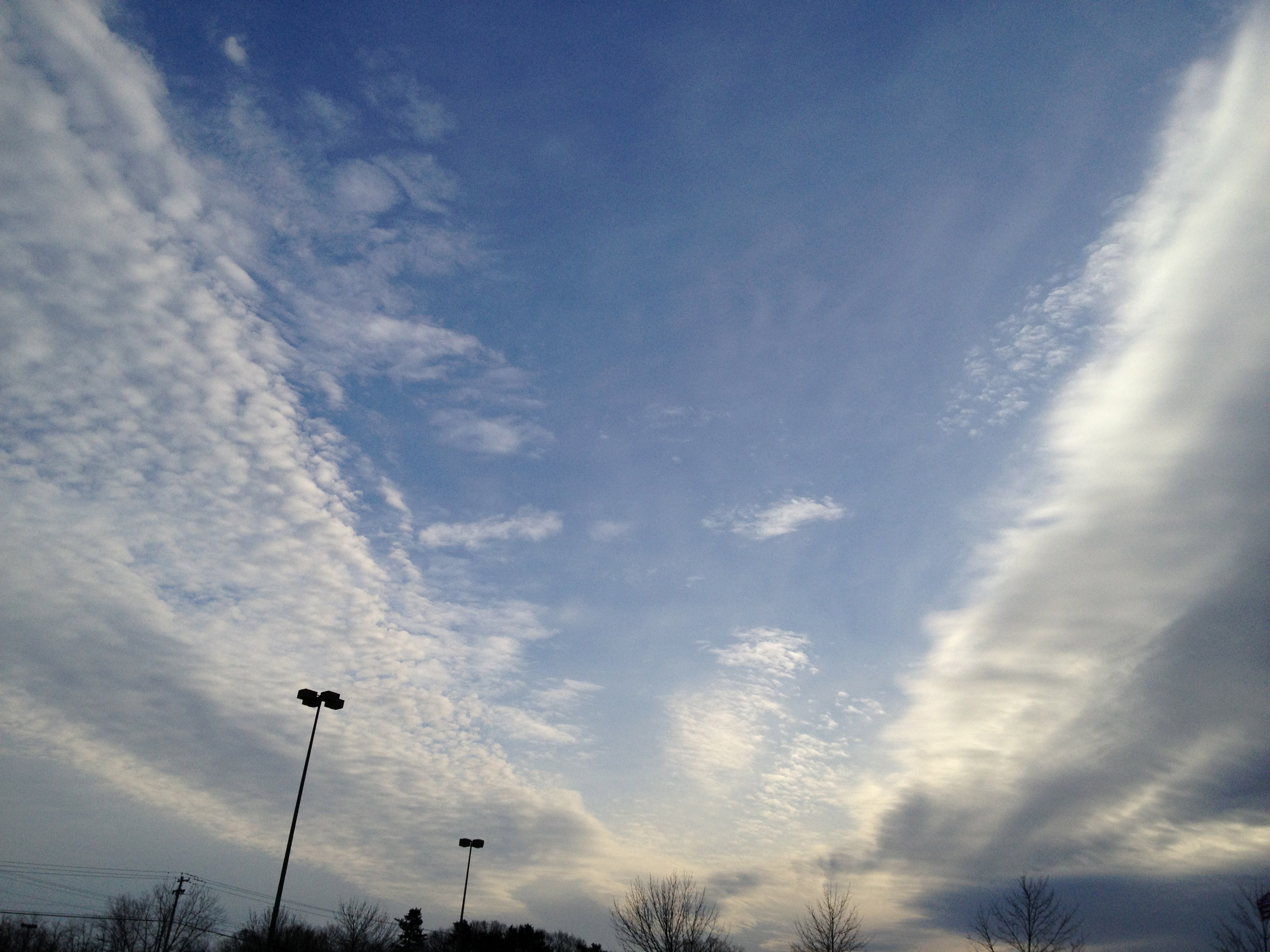
The sky and clouds played
for my amusement today
chasing and changing.The wisps and mottle
the pale turquoise and grey clouds
and then a contrailwind smoothed and harried
travelling with the cold wind
sun pours through the clouds.From the layered tucks
clouds folding against the hills
the sun’s light streams down
Tonight started with a review of some of the things we’d talked of last week and the reading and discussion about four letters from Emily Dickinson to T.W. Higginson. She approached him to look at her poems and he responded, presumably with his thoughts, some advice, some suggested edits.
I was struck by her responses: she kept her distance, disallowed his suggestions and continued on asking questions and wanting a relationship with him.
In this way, artists must live with those who view and read their works. I myself really love to show my quilts. I love to show them to the viewers; I love to hear their responses. I’ve been known to casually stand nearby and eavesdrop. I know, but it’s fascinating to hear how people react, the questions they ask. I once had a person drag me over to a quilt on display and complain about a too dark, too grey square or two. I tried to back her up away from where she stood complaining about it, so she could see the offensive squares recede into the whole.
Anyway.
I think it’s interesting that you might want someone to read or look at your work knowing full well that you’re unlikely to change what you’re doing based on anything they say in reaction or in helpfulness.
OK. Then it was on to Robert Frost.
In full disclosure I will say that I love Robert Frost. You see him quoted here from time to time.
Tonight’s readings, by title, in no particular order:
The Tuft of Flowers
After Apple-Picking
Dust of Snow
The Road Not Taken
The Silken Tent
Never Again Would Birds’ Song Be The Same
Two Tramps in Mud Time (excerpt)
Design
The Wood-Pile
The Hill Wife
The Oven Bird
Fire and Ice
Left on the page, yet unread, were a couple of my favorites: Acquainted With The Night and Birches and Come In.
What did we talk about? Our teacher drew our attention to the finely crafted lines and rhymes. The sonnet forms. The careful breaks from scenes of nature to internal ponderings. The references to Petrarch, Dante and others, similar to Emily taking on Shakespeare in her poems.
To our teacher’s mind, references to birds usually point to the bard-poet. Although both poets were keen observers of nature, both used images of nature to introduce topics far different from nature.
For I have had too much
Of apple-picking: I am overtired
Of the great harvest I myself desired.— After Apple-Picking
and breaks like this:
And then he flew as far as eye could see,
And then on tremulous wing came back to me.I thought of questions that have no reply,
And would have turned to toss the grass to dry;But he turned first, and led my eye to look
At a tall tuft of flowers beside a brook,A leaping tongue of bloom the scythe had spared
Beside a reedy brook the scythe had bared.The mower in the dew had loved them thus,
By leaving them to flourish, not for us,Nor yet to draw one thought of ours to him,
But from sheer morning gladness at the brim.The butterfly and I had lit upon,
Nevertheless, a message from the dawn,— from The Tuft of Flowers
All this makes me want to go back and do a more chronological read of Frost, to see where his poems changed from more formal style to more conversational.
Those turns to address some bigger idea are often what I like most about his poems. I think of The Onset. Such a classic New England moment – the sound of first snow on the bare ground, with a huge dollop of New England reaction – Bring it on – Winter won’t win – I have faith in that.
I hope we talk a bit about Birches next week. What starts as a playful thought, brought down by familiar reality, returns as a clear explanation of the playful thought and then BLAM!
I’d like to get away from earth awhile
And then come back to it and begin over.
May no fate willfully misunderstand me and snatch me away
Not to return. Earth’s the right place for love:
I don’t know where it’s likely to go better.
I’d like to go by climbing a birch tree…
— Birches
We ended with some discussion about the careful meters of both poets and with that we were out into the night. My brain, again, full of words and images.
Ask God’s blessing on your work, but don’t ask him to do it for you.