You know, it’s not all about the glory and the glitter and stuff. Sometimes it’s just about cutting up fabric. Lots of fabric. Lots of pieces. More fabric. More pieces. Rinse and Repeat as they say.
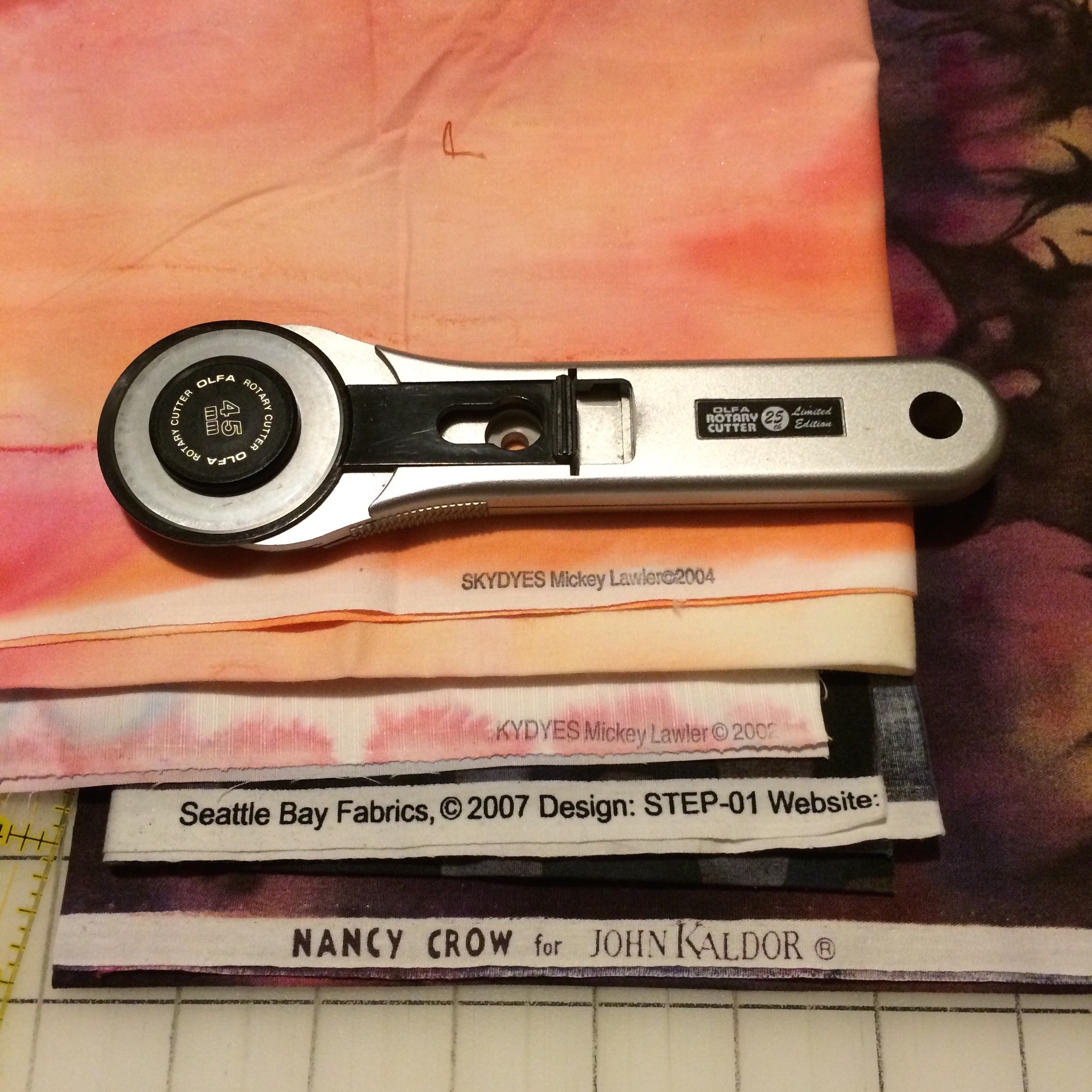
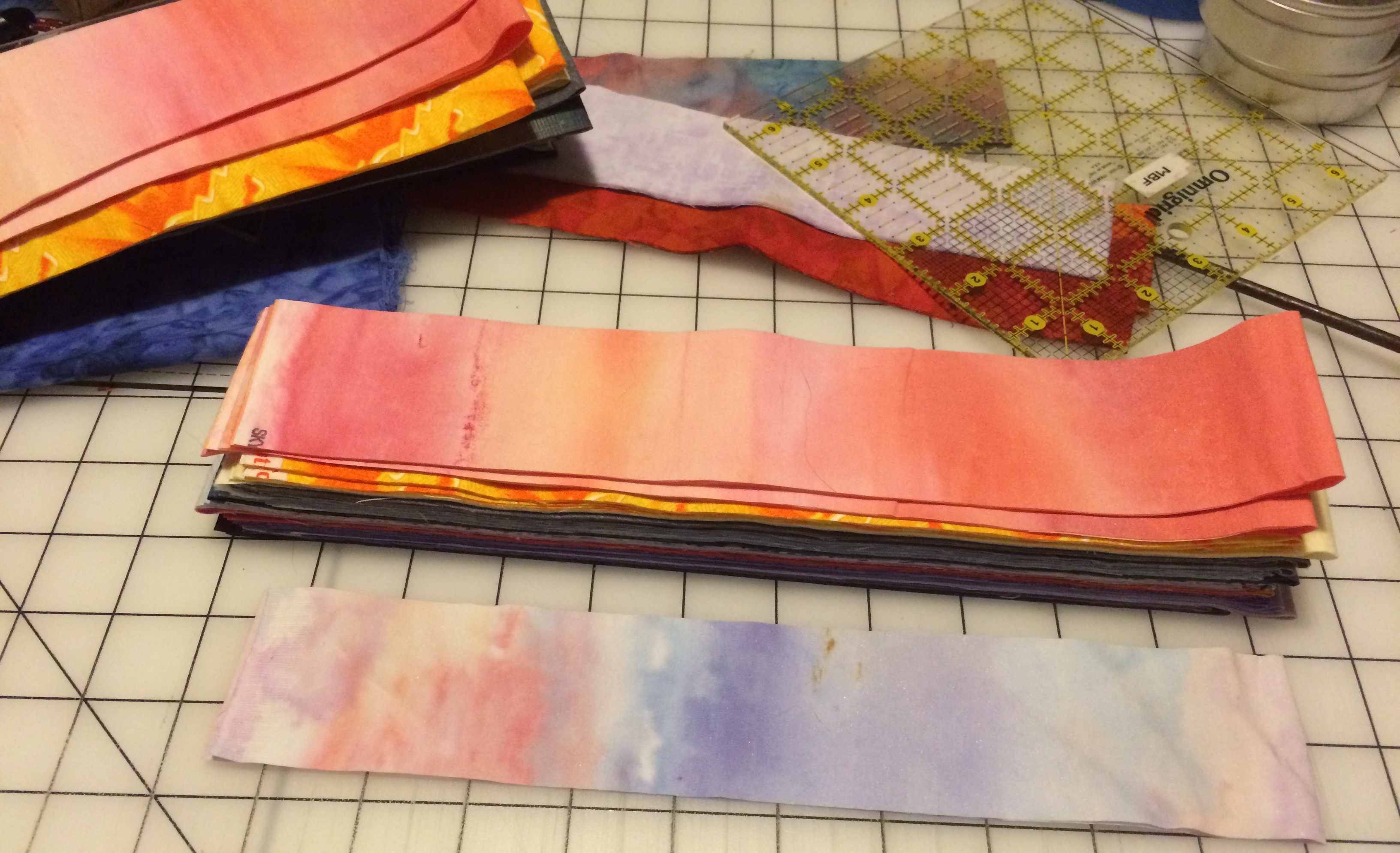
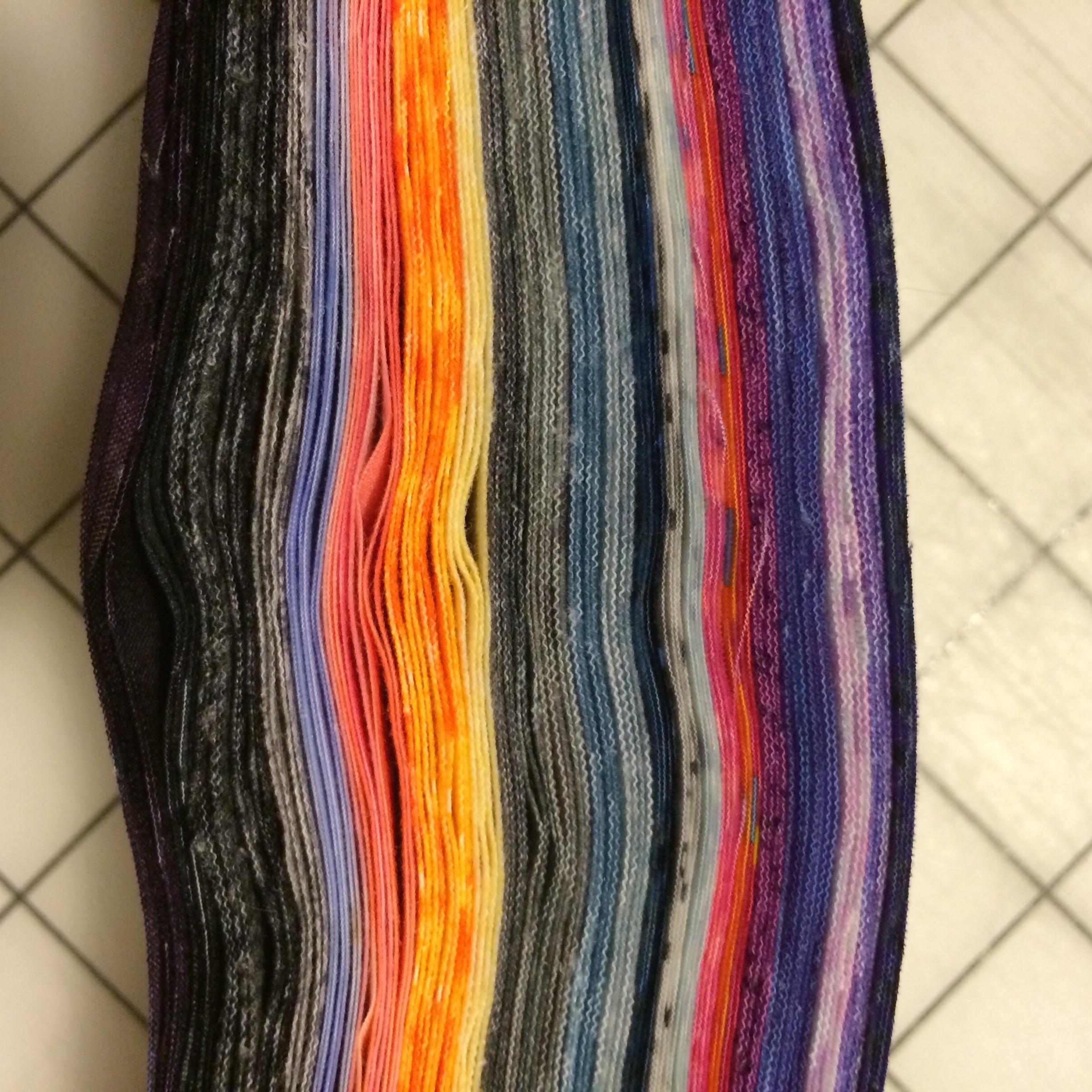

You know, it’s not all about the glory and the glitter and stuff. Sometimes it’s just about cutting up fabric. Lots of fabric. Lots of pieces. More fabric. More pieces. Rinse and Repeat as they say.
Garrison Keillor told me this morning that
It’s the birthday of Japanese poet Kobayashi Issa (books by this author), born in Kashiwabara, Japan (1763). He’s one of the masters of the Japanese form of poetry called haiku, which uses 17 Japanese characters broken into three distinct units. He spent most of his adult life traveling around Japan, writing haiku, keeping a travel diary, and visiting shrines and temples across the country. By the end of his life, he had written more than 20,000 haiku celebrating the small wonders of everyday life.
Guess I have a ways to go.
Everything I touch
with tenderness, alas,
pricks like a bramble.
— Kobayashi Issa
Over two hundred on the fun-side-project though and here’s a couple strays to keep you going.
tonight fireflies
waltz with raindrops in the dark
while the sky dances[***]
I got a buzz on
yesterday while at the beach
said man, walking by.The green force of June
rippling down a rainy road
with darkness behindthe skies darkening
as the weathermen urge us
to pay attention.the disappointment:
the lawn mower starts then fades
the grass goes unmown.I hope Van Gogh knows
how his cypress trees and skies
pulled my heart today.Vincent, all these folk
came to look at your paintings
many moved to tears.hanging on these walls
the swirling skies and flowers
familiar and new.
I ducked over to Williamstown today when I realized that the curators of the new Clark Art Institute exhibit, “Van Gogh and Nature” were going to be giving a presentation today only. I made it in time to wander around the most exquisite downstairs gallery beforehand – and it was quite crowded so you needed to be patient and respectful if you wanted to linger or look up close at anything. Still and all, it was fascinating from the very early, very monochromatic pieces to the bigger, colorful and familiar later works.
One couldn’t help but notice how many different museums had lent their Van Goghs for this exhibit. Scotland, Wales, the Met and many more. Also interesting to me was that the pieces from the Van Gogh Museum in the Netherlands were framed in elegant wood frames that might be considered too plain by many museum goers. They were lovely but quite different from the ornated gilt frames seen in most places.
The first few pieces going into the gallery were by contemporaries and showed how other artists were working with similar landscapes and ideas. Then the Van Gogh works were arranged by place and time in different rooms. There were a few glass cases of books that he’d read or owned and one last case held a copper vase that had been used in the neighboring painting. There were a few Japanese prints of the kind and artist that Van Gogh had collected and studied. One accompanied this painting, one of the last in the exhibit.
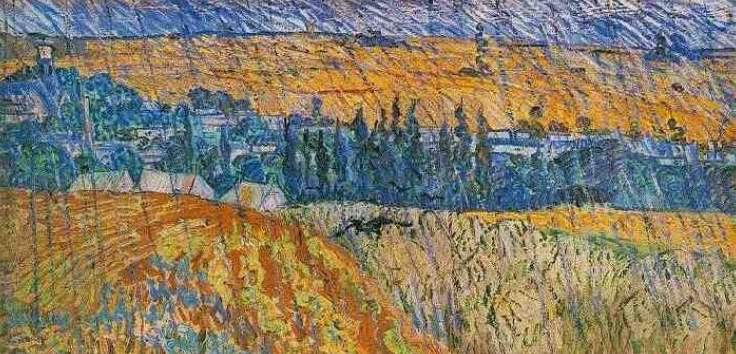
As I stood looking at this painting, I was thinking about the extreme commitment it would have taken to make those slashing lines through the painted landscape and how gratifying it must have been to have it achieve the desired effect. There was a Japanese print nearby which used diagonal black lines to portray rain in a similar way.
During the Q and A period after the three curators had spoken, a woman got up and asked if the slashing lines indicated great anger. The curators were kind and explained that this was his way of showing rain, as he had observed in one of his favorite Japanese prints and probably did not have anything to do with expressing anger.
I put my hand up and got called on next. “I also have a question about this painting. Are there other paintings he did or studies to try out this technique of slashing through the paint?” I wish I had said, because doing that to a really good landscape takes a lot of guts, but I didn’t.
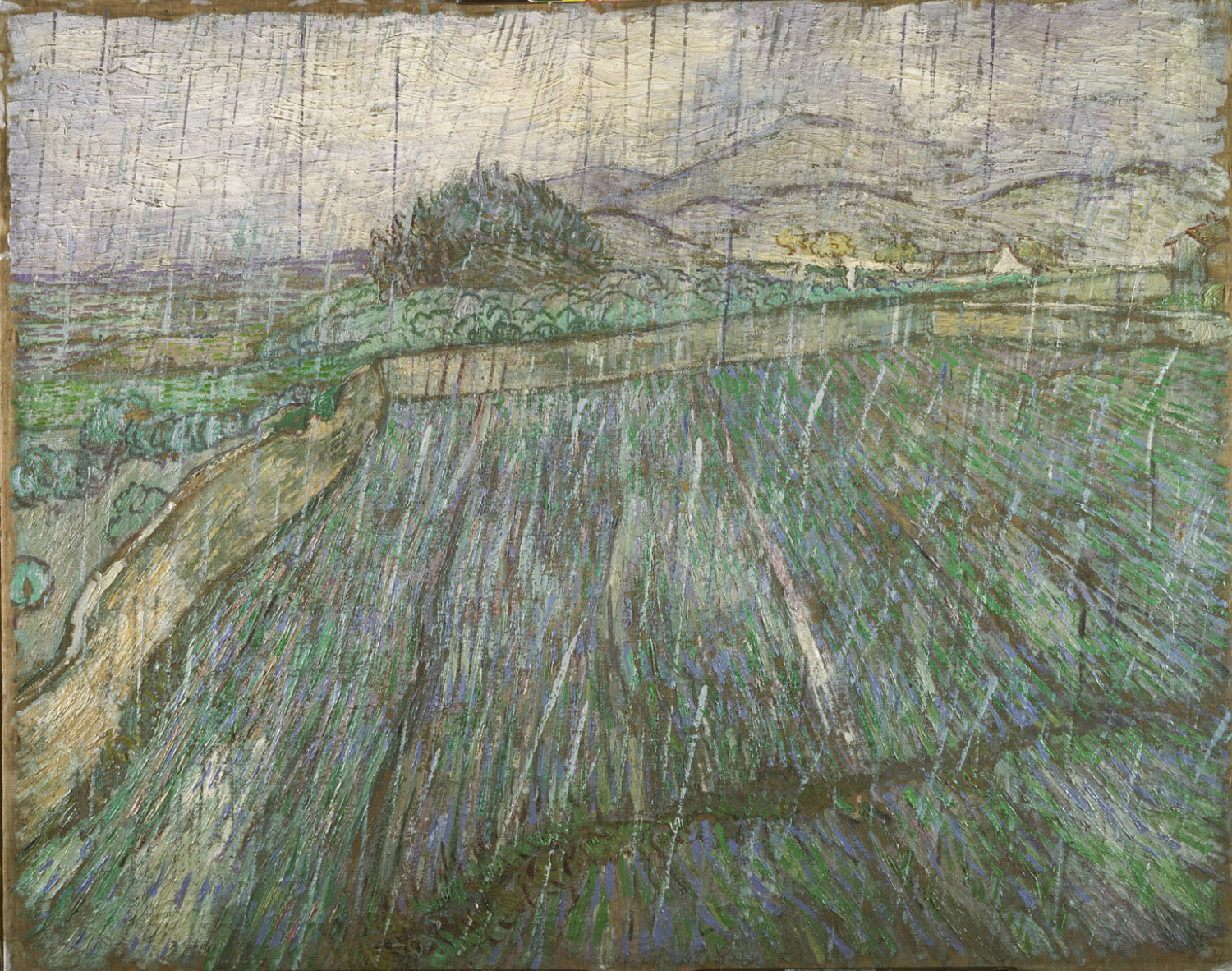
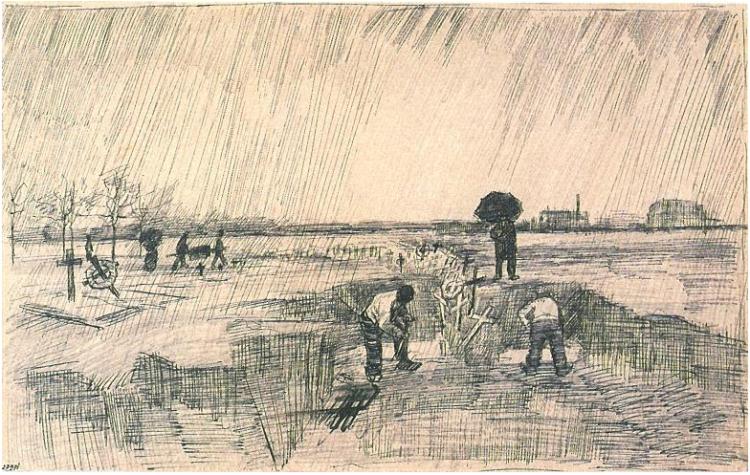
Ah, said the three curators, indeed there is another similar painting in the Philadelphia museum that was too fragile to come here for this exhibit. So he did use that idea in at least one other place and in some drawings too.
When I got home of course I rummaged around. My “Complete Paintings of Van Gogh” only had the Landscape at Auvers painting that I could find easily. The web revealed these two pieces, the first the one in Philadelphia, La Pluie; Saint-Rémy, France, 1889 (Philadelphia Museum of Art, Philadelphia, PA, USA) There’s a PDF teaching guide to the painting here.
and the next an earlier drawing: Churchyard in the Rain, Drawing, Pencil, pen; Nuenen: December, 1883 (Albertina, Vienna, Austria, Europe)
Another great exhibit by The Clark. The three curators are: Richard Kendall, curator at large at the Clark Art Institute; Sjraar van Heugten, former head of collections of the Van Gogh Museum and an independent art historian; Chris Stolwijk, director of the RKD Research Centre, The Hague, and former curator at the Van Gogh Museum.
During their presentation, they encouraged us all to read Van Gogh’s letters, via several books or via the web at http://www.vangoghletters.org/vg/. Mr. Kendall said that when they were looking for a topic to research to pull the exhibit together (all exhibits at The Clark being research-based) he did a search of Van Gogh’s letters and found that the word “nature” appeared in about one-third of all the letters.
There’s a companion book, available at The Clark and other online book purveyors.
If you cannot get to Williamstown, there are many of the paintings to be seen here.
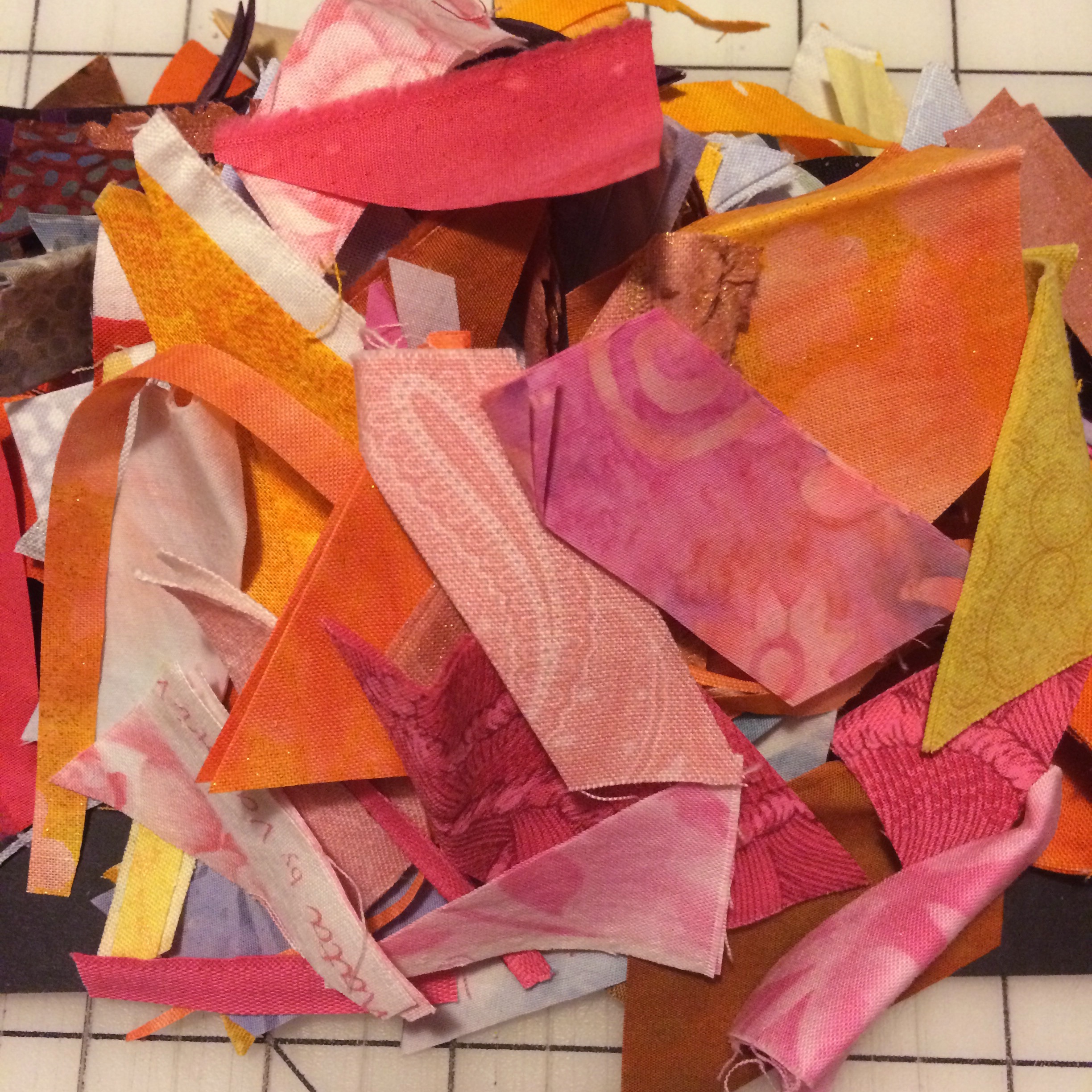
Not really – these are trimming bits – the pieces cut off strips. Not technically snibbles, but I just like that word. Snibbles is (in common tongue) what you end up with as you keep cutting stuff out of your favorite fabrics, making it harder and harder to get more of the pieces you want out of what you have. But you can make it work… I know you can. I think some of these in the photo might qualify as crumbs, but most are too large for that – they’d need to get chopped up more. Ain’t nobody got time for that.
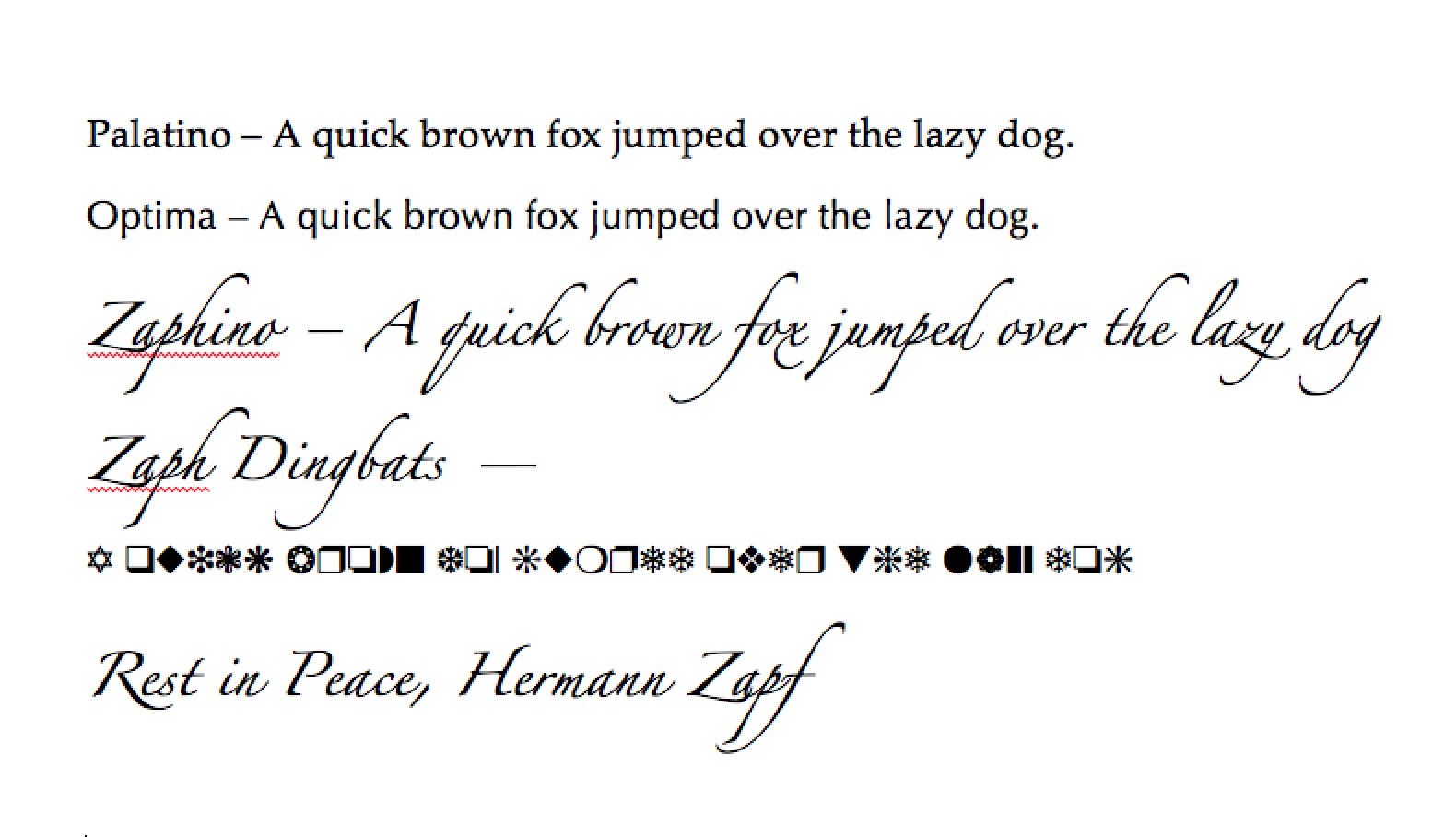
Hermann Zapf, calligrapher and font designer
To love what you do and feel that it matters–how could anything be more fun.